

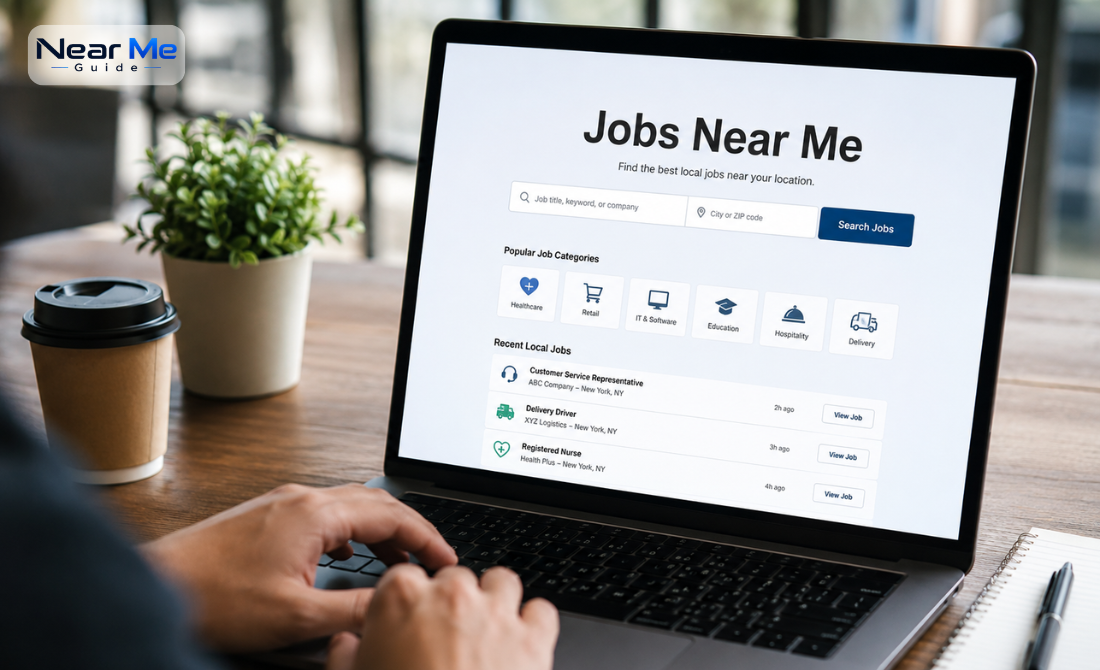
Need a job close to home right now? Typing jobs near me into Google or your phone is one of the fastest ways to see real openings in your area. Whether you want part-time work, a full-time career shift, or flexible gigs, local searches connect you with employers who are hiring today—often within miles of where you live.
In 2026, the job market rewards quick, smart searchers. Google’s job tools, map-based apps, and skills-focused hiring make it easier than ever to find matches without endless scrolling. This guide walks you through everything: how “near me” searches work, the best platforms, step-by-step strategies, and expert tips to stand out and land interviews faster.
How Jobs Near Me Searches Work
Google and other search engines use your location (from GPS, Wi-Fi, or IP address) to show relevant results when you search jobs near me, hiring near me, or similar phrases. You’ll often see a rich results box with job cards, filters for full-time/part-time, salary estimates, and commute times.
Why it matters: These searches prioritize fresh postings, local businesses, and roles matching your past searches or profile. In 2026, AI helps refine matches based on skills and preferences, reducing irrelevant results.
Benefits include saving time on commuting, supporting local economies, and often faster hiring processes for in-person roles.
Top Platforms for Finding Jobs Near Me
Several tools dominate local job hunting:
- Google for Jobs: Aggregates listings from Indeed, LinkedIn, ZipRecruiter, and more. Use filters for “near me,” date posted, and job type.
- Indeed: Massive volume of local postings with easy one-click apply and salary info.
- ZipRecruiter: Strong for quick applications and mobile alerts; highly rated for user experience.
- LinkedIn: Great for networking, company insights, and professional roles. Enable “Open to Work” and search locally.
- Local options: Craigslist for gigs, government sites like EmployFlorida or WorkSource for area-specific help, and map-based apps like WorkOnward.
Pro tip: Set up daily email alerts for your exact search terms to stay ahead.
Step-by-Step: How to Search and Apply for Jobs Near Me
- Prepare your materials — Update your resume with local keywords (e.g., city or region skills). Tailor it to highlight relevant experience.
- Search smart — Use Google or apps with phrases like “[your role] jobs near me,” “part time hiring [area],” or “entry level warehouse near me.”
- Filter effectively — Sort by newest postings, distance, salary, and experience level.
- Apply quickly — Many sites offer easy apply. Customize your message or cover note when possible.
- Follow up — Note application dates and politely check in after 7–10 days.
- Track everything — Use a simple spreadsheet for jobs applied to, responses, and interviews.
This process typically takes minutes per application once you’re set up.
Types of Local Jobs Available in 2026
Common categories include:
- Retail, hospitality, and customer service (flexible hours)
- Healthcare support, warehousing, and logistics (steady demand)
- Trades, construction, and delivery (often higher pay, local routes)
- Office/admin, education support, and tech support roles
Emerging opportunities lean toward skills in AI tools, green energy, and hybrid positions.
Benefits of Finding Jobs Close to Home
Shorter commutes mean better work-life balance, lower transportation costs, and more time for family or side pursuits. Local roles often build community connections and can lead to faster promotions within regional companies. Many offer immediate starts, especially in high-turnover sectors.
Factors to Consider When Choosing Local Jobs
- Commute and location — Check parking, public transit, or remote/hybrid options.
- Pay and benefits — Look beyond salary for health coverage, flexibility, and growth.
- Company culture — Read recent reviews on Glassdoor.
- Hours and schedule — Match your lifestyle (evenings, weekends, etc.).
- Accessibility — Consider ADA features, safety, and inclusivity.
Always verify current details like business hours and requirements before applying or interviewing.
How Much Do Local Jobs Pay? Average Costs and Expectations
Pay varies widely by role, location, and experience. Entry-level retail or warehouse might start $15–20/hour, while skilled trades or healthcare support can exceed $25–40+/hour plus benefits. Use salary filters on job sites and tools like Glassdoor for local averages. Factor in cost of living—higher pay in busy areas often balances expenses.
How to Choose the Best Option for You
Compare 3–5 strong matches using a simple pros/cons list. Prioritize roles aligning with your skills and long-term goals. Talk to current employees via LinkedIn if possible. For quick income, consider temp agencies or gig platforms alongside permanent searches.
Common Mistakes to Avoid
- Applying to everything without tailoring — quality beats quantity.
- Ignoring mobile optimization — many apply on phones.
- Neglecting networking — referrals often beat cold applications.
- Skipping follow-ups or preparation for interviews.
- Not checking for scams (legitimate employers rarely ask for upfront payments).
Expert Tips and Best Practices
- Optimize your online presence — Professional LinkedIn photo, updated profile, and positive reviews.
- Leverage local resources — Visit Workforce centers, job fairs, or community boards.
- Build skills fast — Free or low-cost online certs in high-demand areas boost visibility.
- Network locally — Attend events, join community groups, or message alumni.
- Use AI tools wisely — For resume tweaks, but always personalize.
- Stay consistent — Dedicate time daily; momentum matters.
Voice search friendly questions answered:
- Where can I find jobs near me right now? Google “jobs near me” or open Indeed/ZipRecruiter apps with location enabled.
- How do I choose the right local job? Match skills, commute, and growth potential—read reviews and compare offers.
- How much does it cost to job hunt? Mostly free; optional expenses include professional resume help ($100–300) or transport for interviews.
Pros and Cons of Local Job Searching
Pros: Faster hiring, lower costs, community ties, easier interviews. Cons: Fewer options in rural areas, potentially lower salaries than big-city remote roles, competition from locals.
Real-World Recommendations
Start with Google for broad discovery, then dive into specialized sites. For hourly work, try Snagajob or local staffing agencies. Professionals should focus on LinkedIn and direct company applications. Combine online searches with in-person visits to businesses hiring “now.”
Future Trends in Local Job Searching for 2026 and Beyond
AI matching, skills-based hiring (less emphasis on degrees), map-based discovery, and hybrid/gig flexibility are rising. Expect more emphasis on soft skills, continuous learning, and roles in healthcare, green tech, and logistics. Job seekers who adapt quickly with strong profiles will thrive.
FAQs
Q1. How accurate are “jobs near me” results?
Very accurate when location services are on. Results update in real-time and prioritize fresh local postings.
Q2. Can I find remote jobs with near me searches?
Yes—add “remote” or “hybrid” to your query. Many platforms let you filter nationwide while starting locally.
Q3. What’s the fastest way to get hired locally?
Apply to recent postings on Indeed or ZipRecruiter, prepare for quick interviews, and consider temp-to-hire roles or staffing agencies.
Q4. Do I need experience for most local jobs?
Many entry-level positions value attitude and reliability over extensive experience. Highlight transferable skills.
Q5. How often should I check for new jobs?
Daily or set alerts for the best results—new postings appear constantly.
Conclusion
Finding the right jobs near me has never been easier in 2026. With smart tools, local platforms, and a focused approach, you can quickly connect with opportunities that fit your schedule and goals. Start searching today, stay consistent with applications, and don’t hesitate to network in your community. Your next great role could be just around the corner—good luck!